
The Hard Part of Batch Subtitle Extraction Starts After the Text Is Found
As the number of videos grows, status, naming, version control, source mapping, and exceptions determine whether the extracted subtitles become usable assets or a larger folder to clean up.
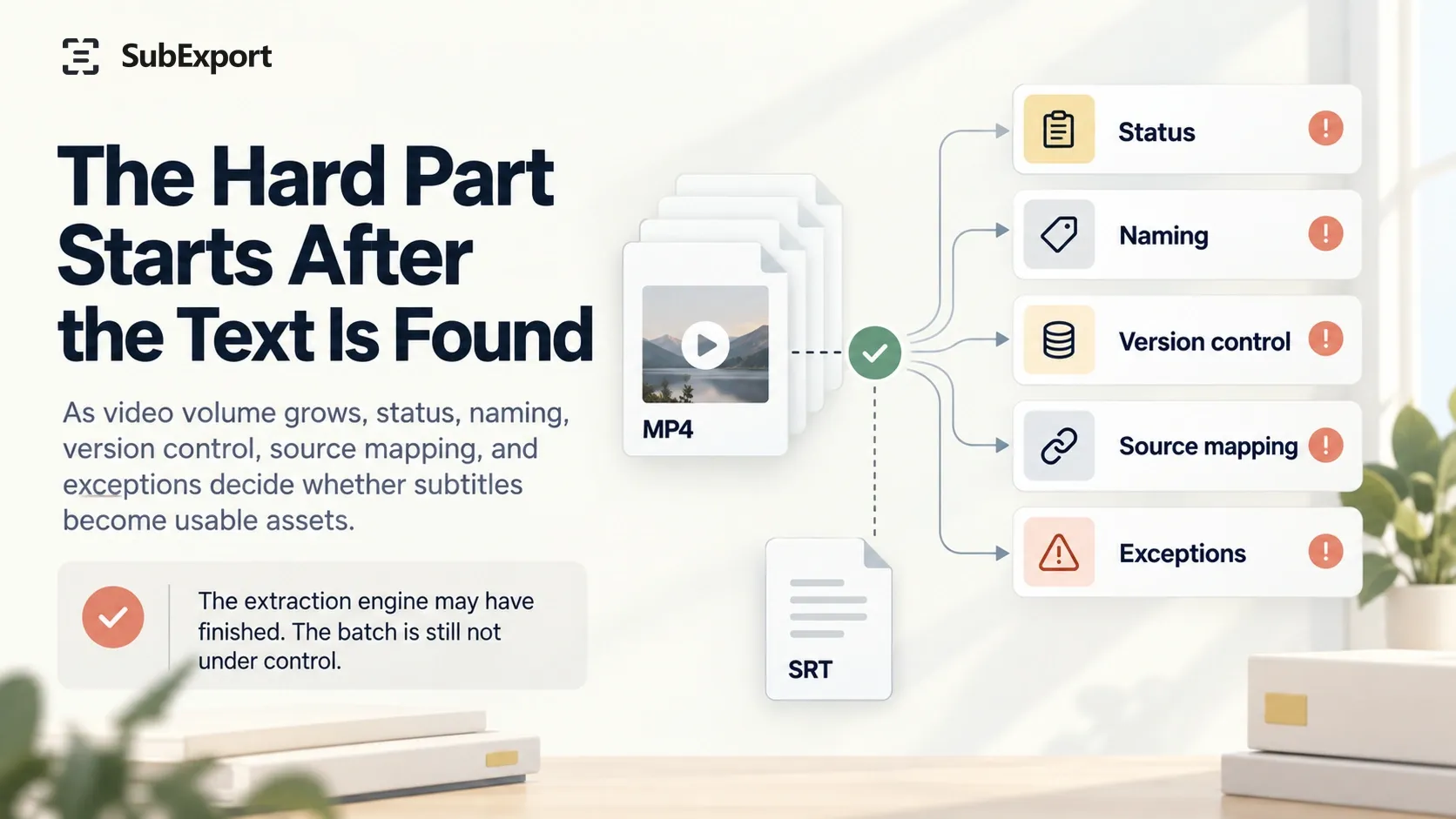
Three videos can be managed from memory. Thirty or a hundred cannot. Different operators use different names. One source is processed twice. Another fails silently. Downloads are spread across personal folders, and the final packager must work backward to understand what happened.
The extraction engine may have finished. The batch is still not under control.
Large batches cannot depend on personal memory
At low volume, informal workarounds are recoverable. At high volume, the project needs an explicit relationship between source files, extraction status, output files, and delivery readiness.
Four small problems cause most of the confusion:
(1) source videos and subtitles use different naming rules;
(2) alternate source versions are not distinguished;
(3) failed or missing items are not recorded promptly;
(4) results are distributed across individual operators and consolidated late.
Each problem makes the others harder to diagnose.
“Extracted” and “ready to deliver” should be separate states
A subtitle can exist while still lacking the required format, timing structure, source mapping, or review status. Treating every generated file as finished hides the remaining work.
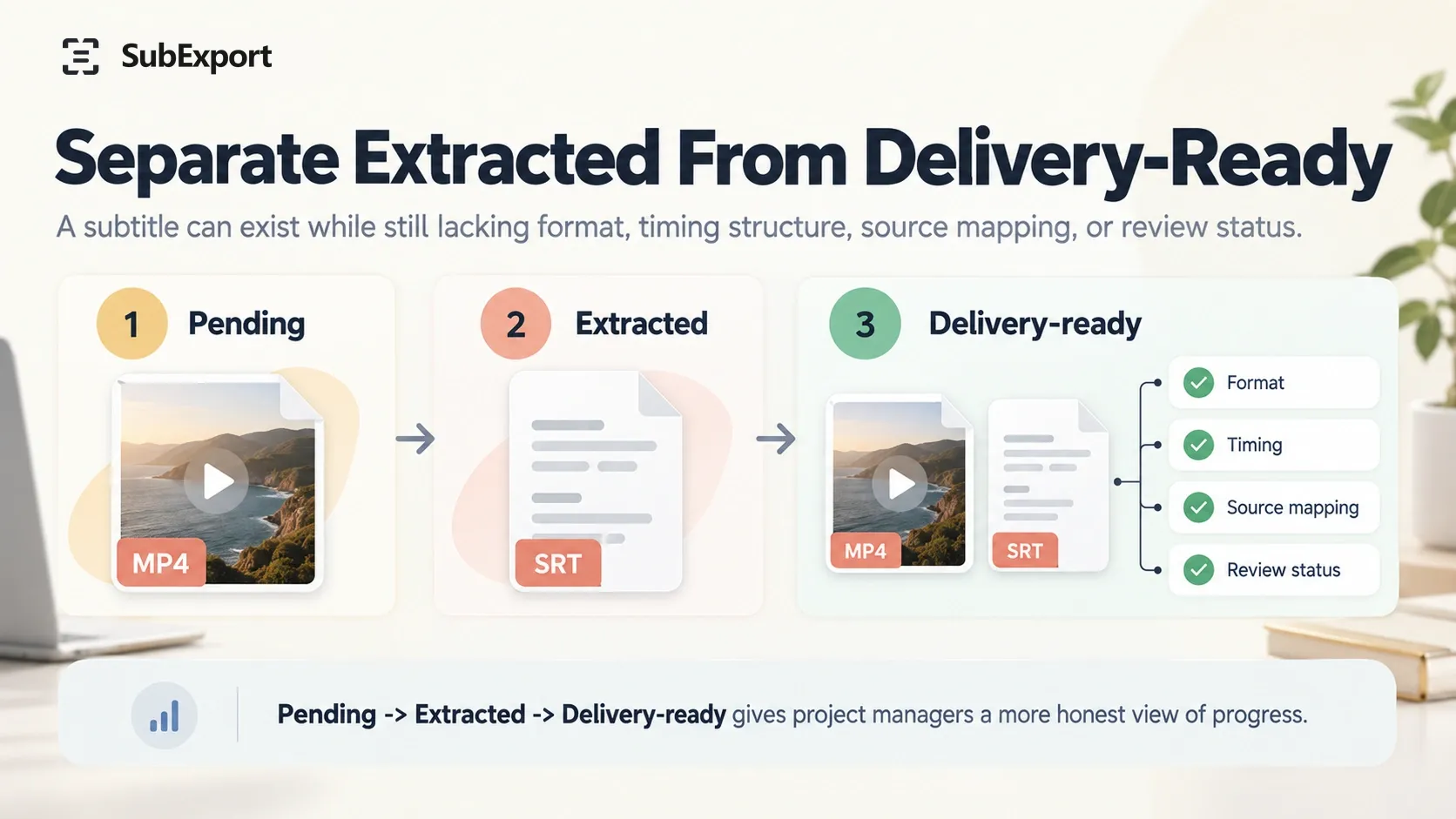
A simple project model can separate:
(1) Pending: source received but not yet processed.
(2) Extracted: subtitles and timing have been extracted from burned-in captions or generated through speech recognition.
(3) Delivery-ready: the required format, naming, source mapping, and batch checks are complete.
Distinguishing these three states helps project managers see what still needs processing and what is ready for handover.
Organizing everything at the end creates a second project
If operators focus only on output generation and leave organization to one person at the end, that person has to reopen files, ask colleagues what happened, identify duplicates, and request reruns. The batch is interpreted twice—once during extraction and again during packaging.
Building source mapping and status into the workflow avoids that hidden rework.
SubExport manages subtitles against the source batch
SubExport is a managed batch video subtitle extraction and organization service. Readable burned-in subtitles are recovered through hard-subtitle OCR; when no usable hard subtitle exists, speech-to-subtitle extraction can be evaluated for intelligible audio.
The standard delivery provides one source-mapped, editable, time-coded SRT per video, plus a status list for failed, unreadable, or unresolved items. Naming, format, review scope, material handoff, and acceptance criteria are confirmed for the project.
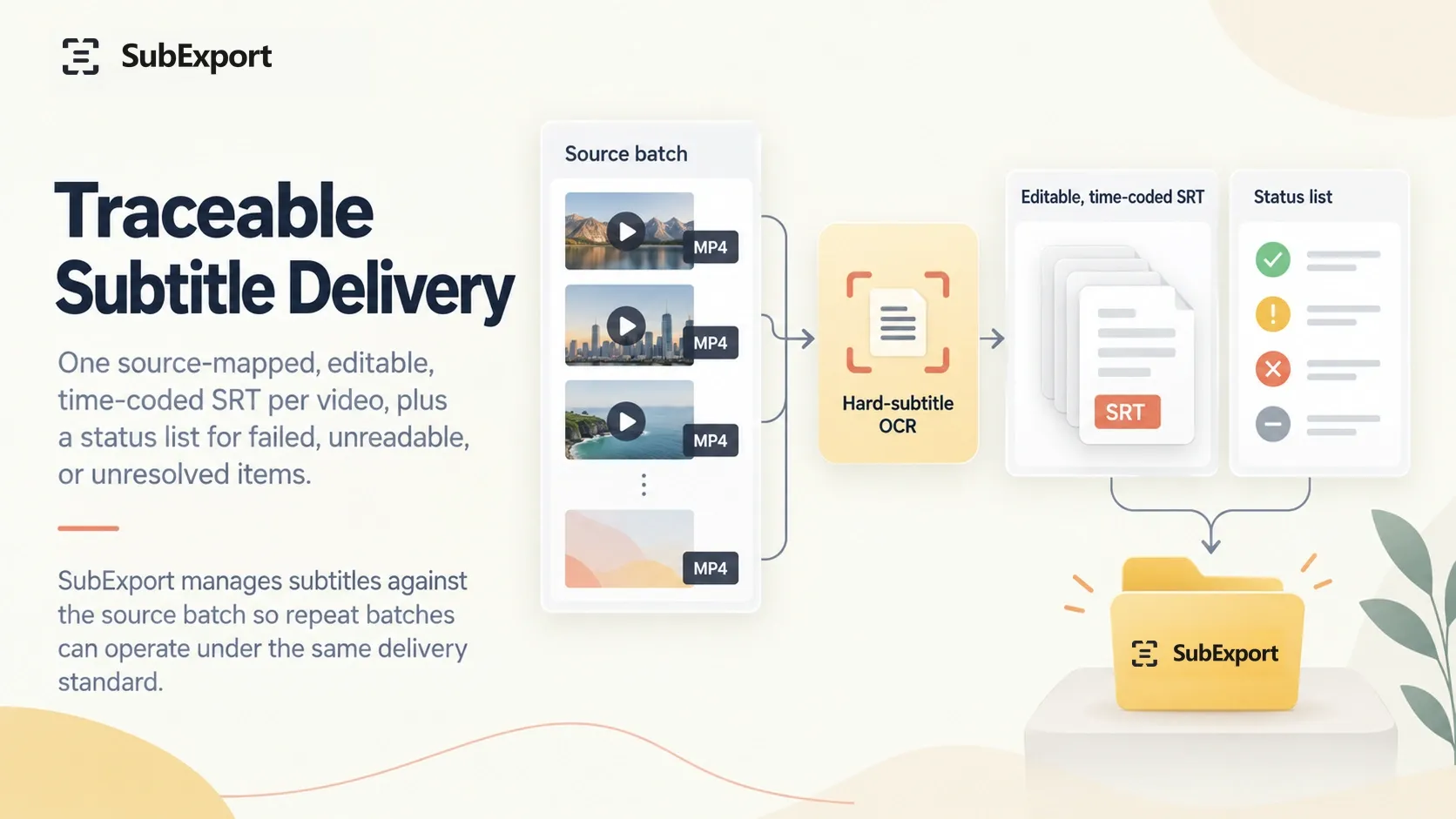
This keeps subtitle assets connected to the videos they came from and makes repeat batches easier to operate under the same delivery standard.
A batch should remain understandable without one person's memory
The receiving team should be able to locate any source, find its subtitle, verify completeness, and understand exceptions without calling the operator who processed it.
If your video volume is creating naming and status problems, provide the source inventory, existing naming structure, extraction condition, required format, and next use. SubExport can organize the project around a traceable subtitle delivery.
Learn more about SubExport
Visit the website: SubExport official website
Submit your project: Contact us