
Batch Subtitle Extraction: How to Get Files Your Team Can Use Right Away
Batch subtitle extraction creates value only when the result has the structure, timing, editability, and source mapping required by the next workflow.
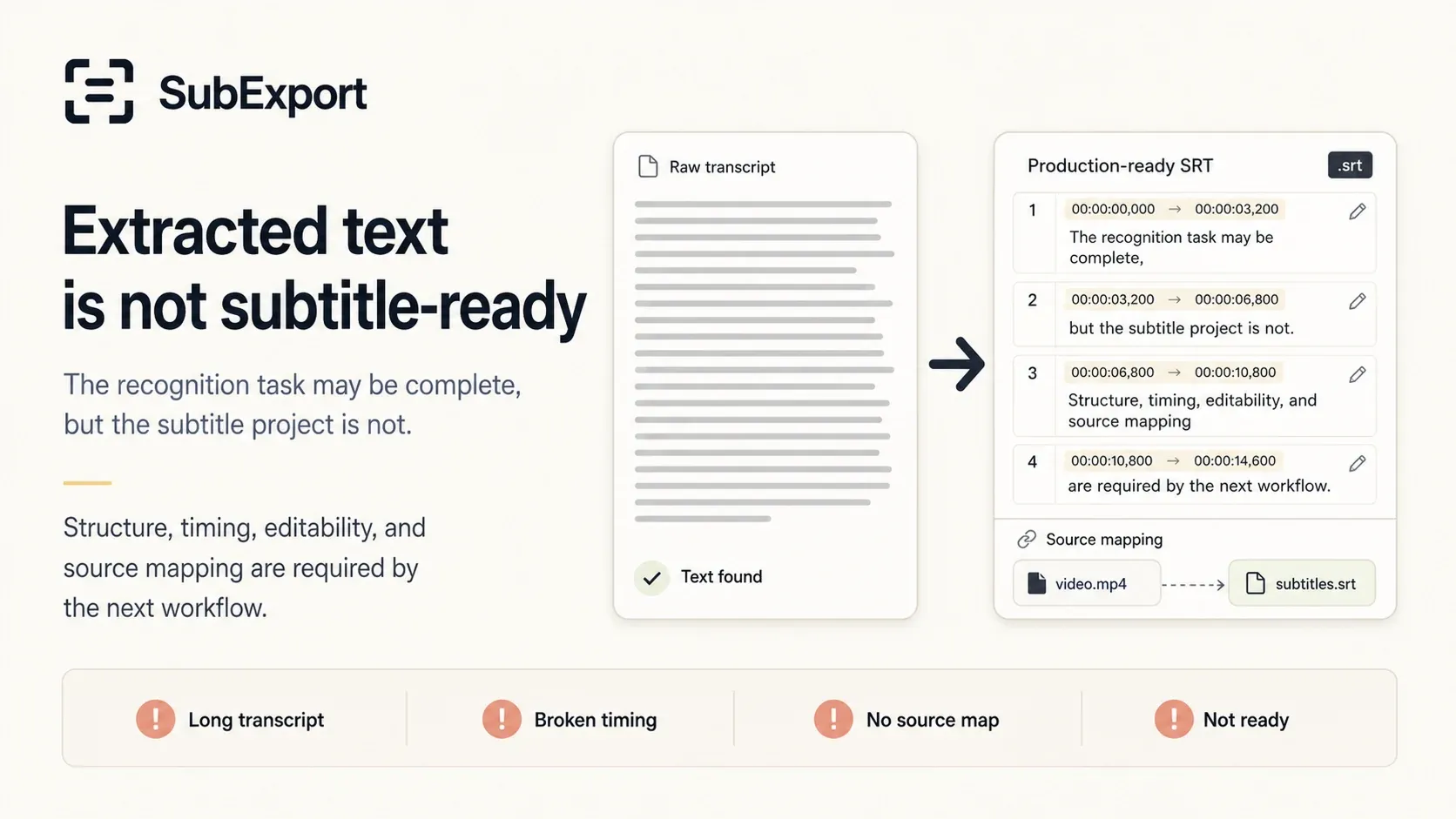
A team can finish processing dozens of videos and still face hours of cleanup. The output is one long transcript. Sentence breaks do not work on screen. Timing needs to be rebuilt. Files no longer match the original videos.
The recognition task may be complete, but the subtitle project is not.
“Text found” and “subtitle ready” are different states
A transcript can be enough when the goal is to skim an interview or search a recording. It is not enough when the material needs to return to an edit timeline, enter translation, or be rendered as captions.
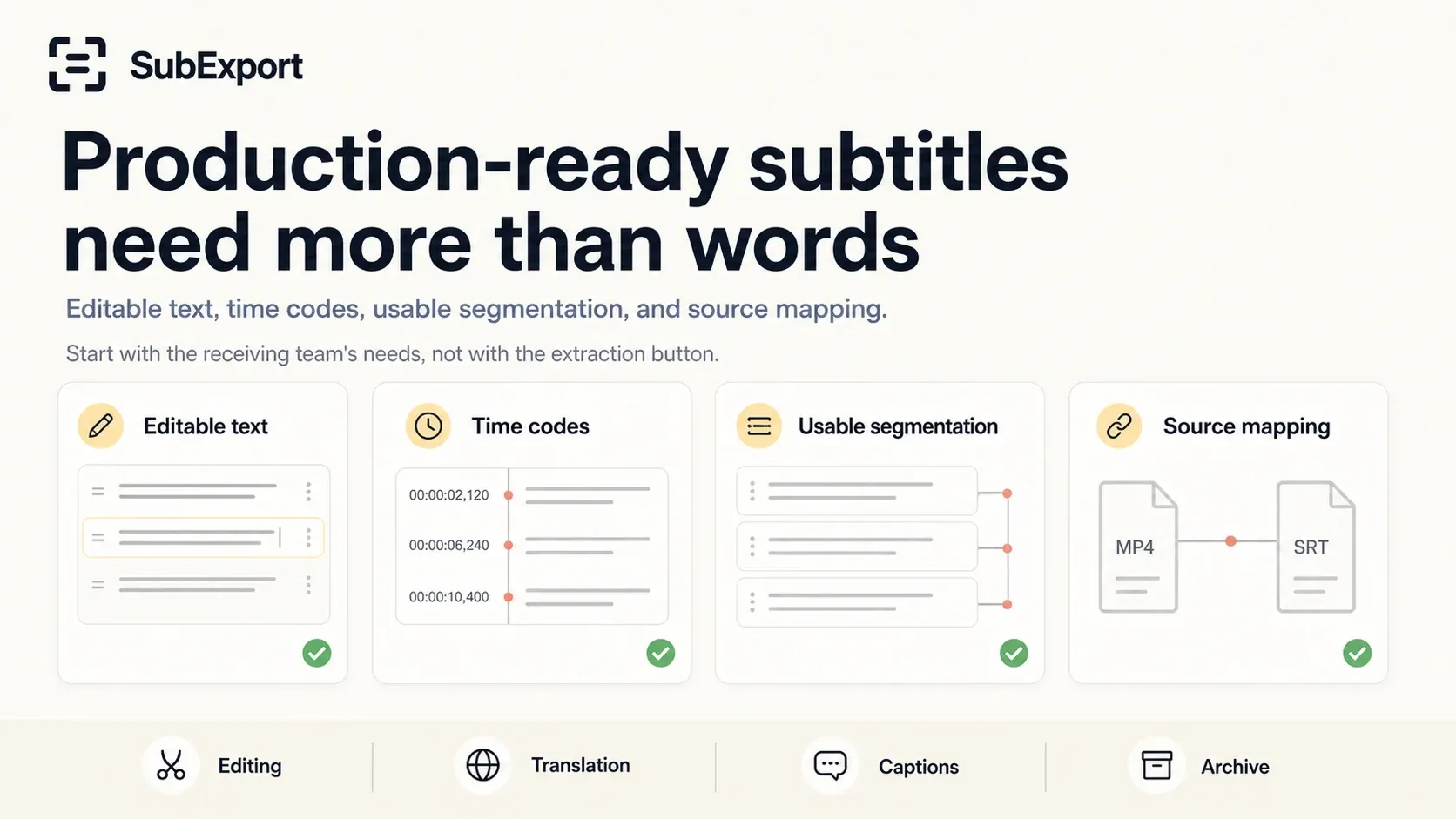
Production-ready subtitles need more than words:
• Editable text: names, terminology, punctuation, and project-specific language can be revised
• Time codes: each subtitle can be connected to the relevant moment in the video
• Usable segmentation: the content is structured as subtitle entries rather than an undifferentiated paragraph
• Source mapping: every file can be traced to the correct video
The exact level of review must be defined for the project. Automatic extraction and basic organization do not automatically include line-by-line human editing.
The next use determines the right output
An interview archive, a social-video edit, and a localization project may begin with the same source file but require different deliverables.
For search, a transcript may be sufficient. For editing, time codes and importable SRT matter. For translation, stable segmentation, editability, and episode mapping reduce confusion. If those requirements are discovered only after the batch is processed, the team pays for a second conversion workflow.
Start with the receiving team's needs, not with the extraction button.
Self-service tools often move organization downstream
The common workflow—upload one file, wait, download, rename, repeat—can work for a few videos. At larger volume, someone must track uploads and downloads, combine material from different folders, convert outputs, and reconcile file names.
The tool has saved manual transcription, but the project still depends on internal people to turn raw results into a delivery package. When editors and translators both receive the batch, each may repeat the same identification work.
SubExport delivers editable subtitles against the source batch
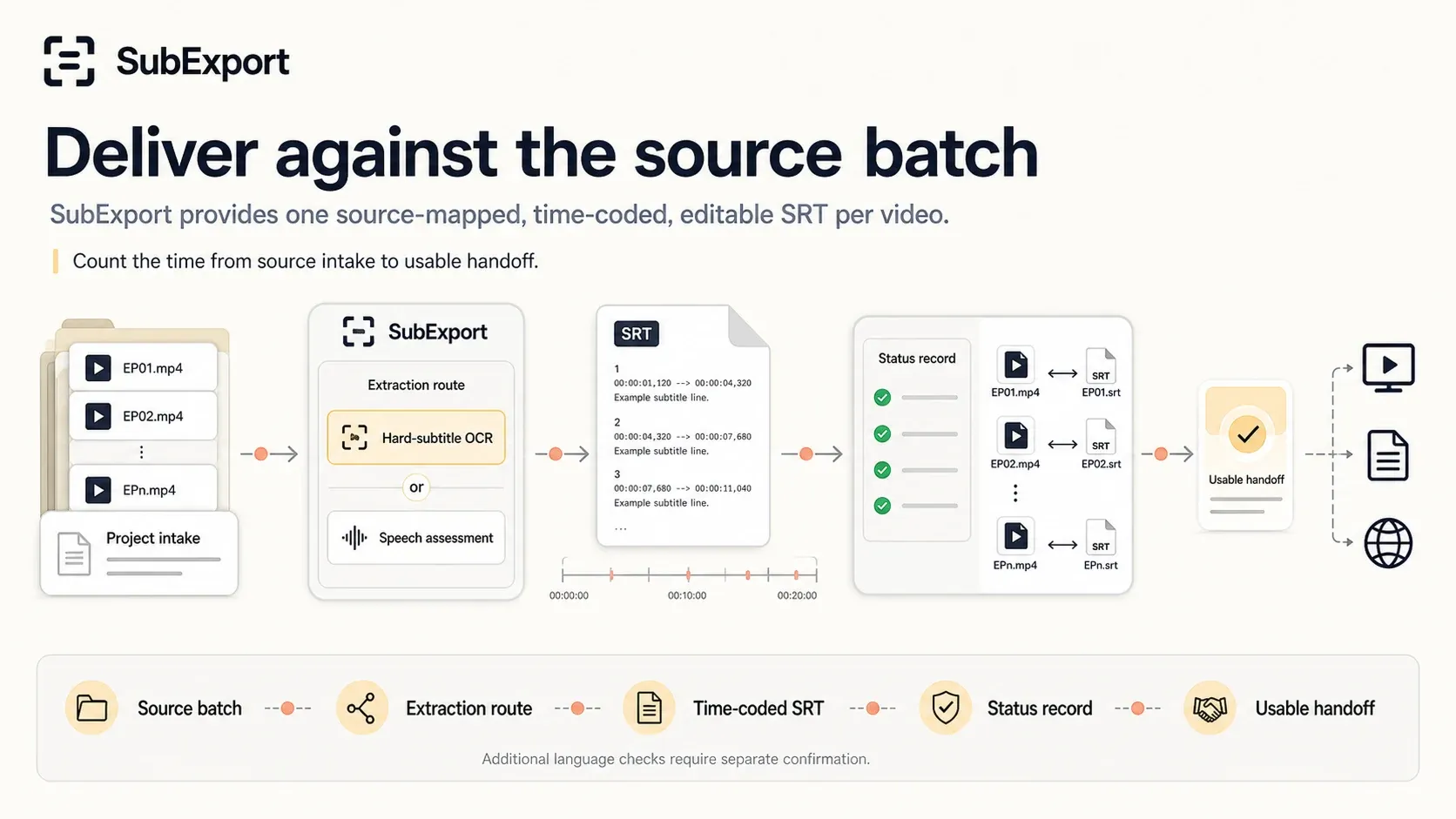
SubExport is a managed service for batch subtitle extraction and organization. Hard-subtitle OCR is the primary route when readable subtitles are burned into the picture. When there is no usable hard subtitle, speech-to-subtitle extraction can be assessed for intelligible audio.
The project confirms the source batch, extraction route, required format, quality-control scope, naming, and acceptance criteria. Standard delivery provides one source-mapped, time-coded, editable SRT per video, plus a status record for failed or unresolved items. Other formats or additional line-level language checks require separate confirmation.
This turns extracted content into files that can continue through editing, localization, search, or archive work.
Count the time from source intake to usable handoff
Recognition speed is only one segment of the project. A more useful measure includes preparation, extraction, cleanup, conversion, naming, checking, and handoff.
If you have short dramas, courses, interviews, or social-video batches, provide the volume, visible-subtitle or audio conditions, required format, review expectations, and intended next use. SubExport can define a delivery around the file your receiving team actually needs.
Learn more about SubExport
Visit the website: SubExport official website
Submit your subtitle extraction project: Contact us