
How to Choose a Batch Subtitle Extraction Service: Evaluate the Delivery, Not Just the Speed
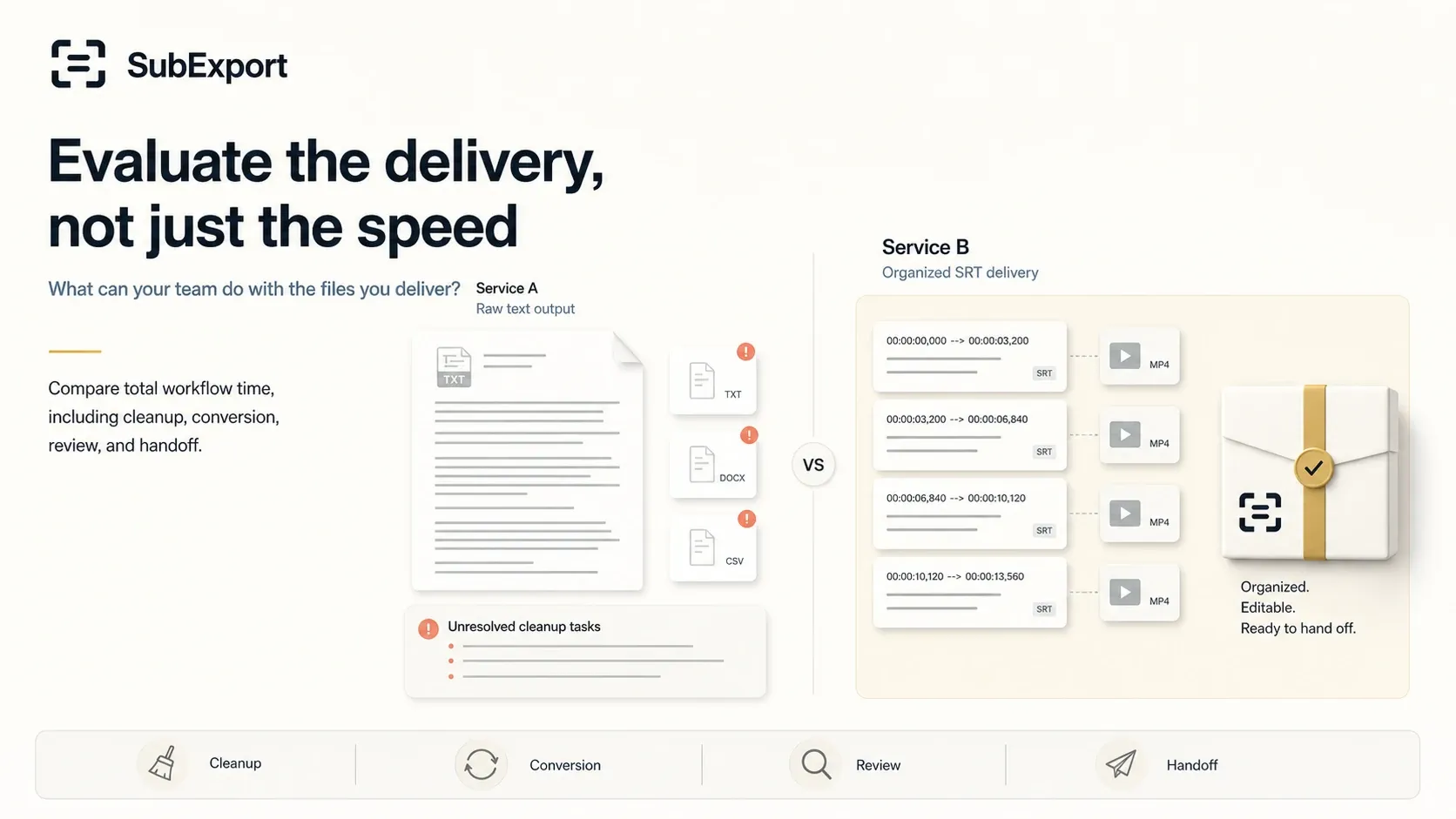
Fast processing and broad language claims are easy to compare. They are also incomplete purchasing criteria. A team extracting subtitles from a drama series, a course library, or hours of interviews needs to know what remains after the provider finishes.
The best question is not “How fast can you recognize the content?” It is “What can my team do with the files you deliver?”
Compare total workflow time
Imagine two services processing the same course library.
• Service A quickly returns raw text. The client then rebuilds subtitle entries, creates time codes, renames every file, and checks which lesson it belongs to.
• Service B returns editable, time-coded subtitle files organized against the source videos.
Service A may win the recognition race while creating the longer project. Buyers should include internal cleanup, conversion, review, and handoff time in the comparison.
Ask how the service handles the actual source condition
Subtitle extraction can begin from different evidence. A video may contain readable burned-in captions, intelligible speech, both, or neither at usable quality.
Ask the provider to explain which route applies to your material. Hard-subtitle OCR is affected by font size, outlines, background, compression, and occlusion. Speech extraction is affected by language, accent, noise, overlapping speakers, and specialist vocabulary. A universal accuracy percentage cannot predict every batch.
Representative files reveal more than a generic claim.
Confirm what “subtitle file” means
Before purchasing, establish whether the result includes:
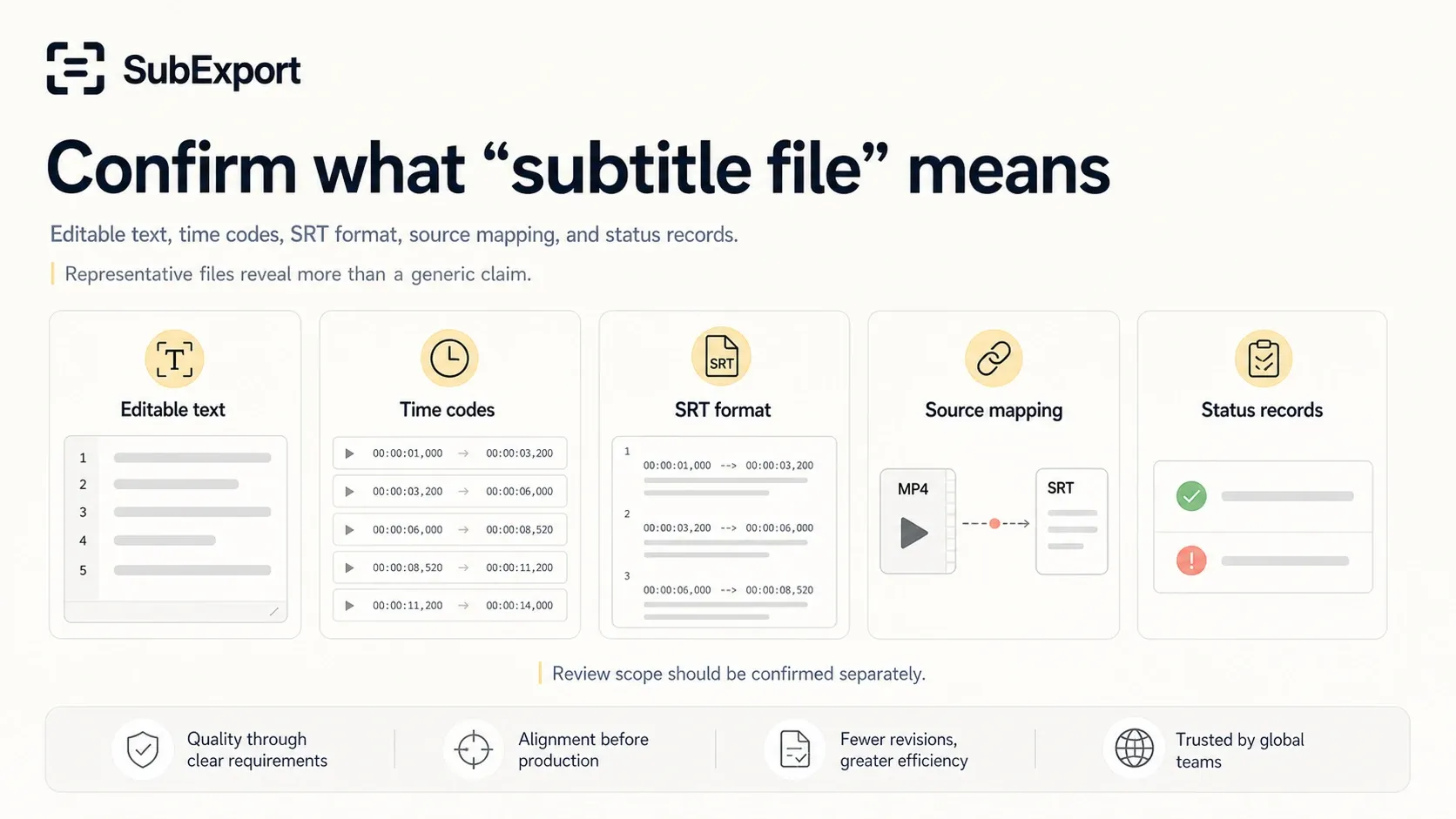
• editable subtitle text rather than locked output;
• time codes that can return to the video workflow;
• an agreed format such as SRT;
• stable mapping to each source video;
• a visible record of failures or unresolved files;
• the specific level of review included in the scope.
Automatic extraction and basic organization should not be confused with an additional line-level language review scope.
Evaluate batch control and handoff
For multi-episode content, ask to see how the source set and final package will be organized. A provider that returns usable subtitle files but no episode mapping leaves a critical task with the client.
The delivery model should make it possible to verify expected counts, locate the subtitle for any source file, and identify exceptions without reopening every video.
Use the following comparison to assess the total workload behind each quote or proposal:
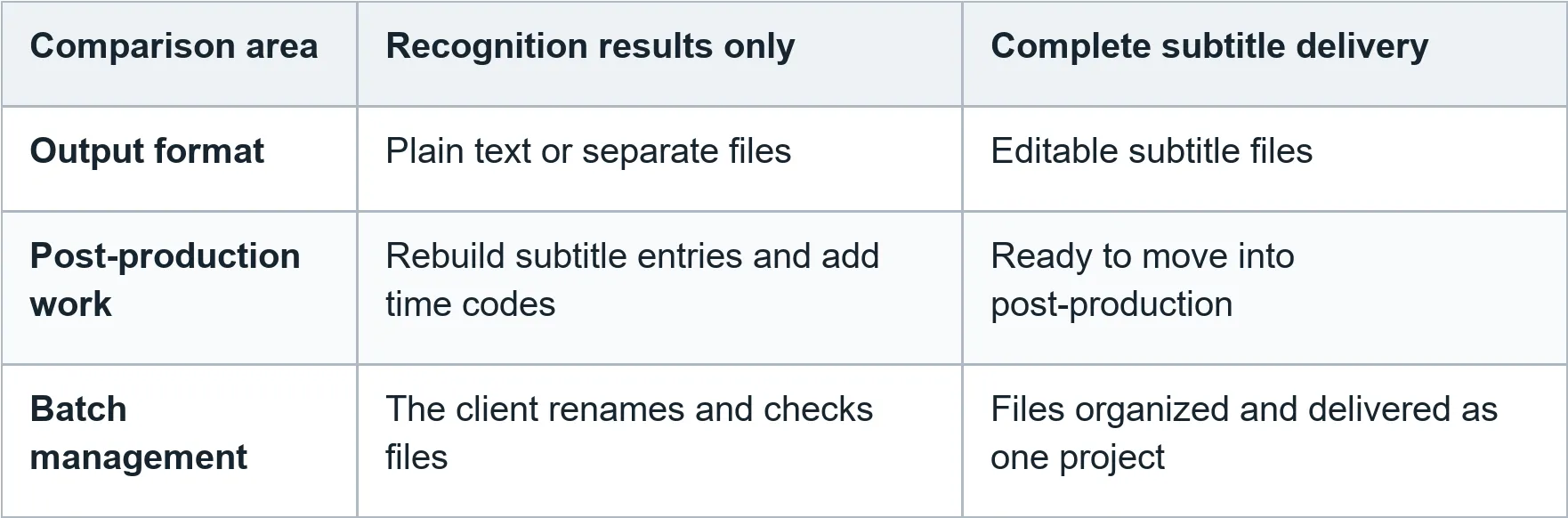
Compare both what the provider completes and what your team still needs to do after delivery.
What SubExport is designed to deliver
SubExport is a managed batch video subtitle extraction and organization service. It prioritizes OCR when readable hard subtitles are visible in the picture and evaluates speech-to-subtitle extraction when no usable hard subtitle is available.
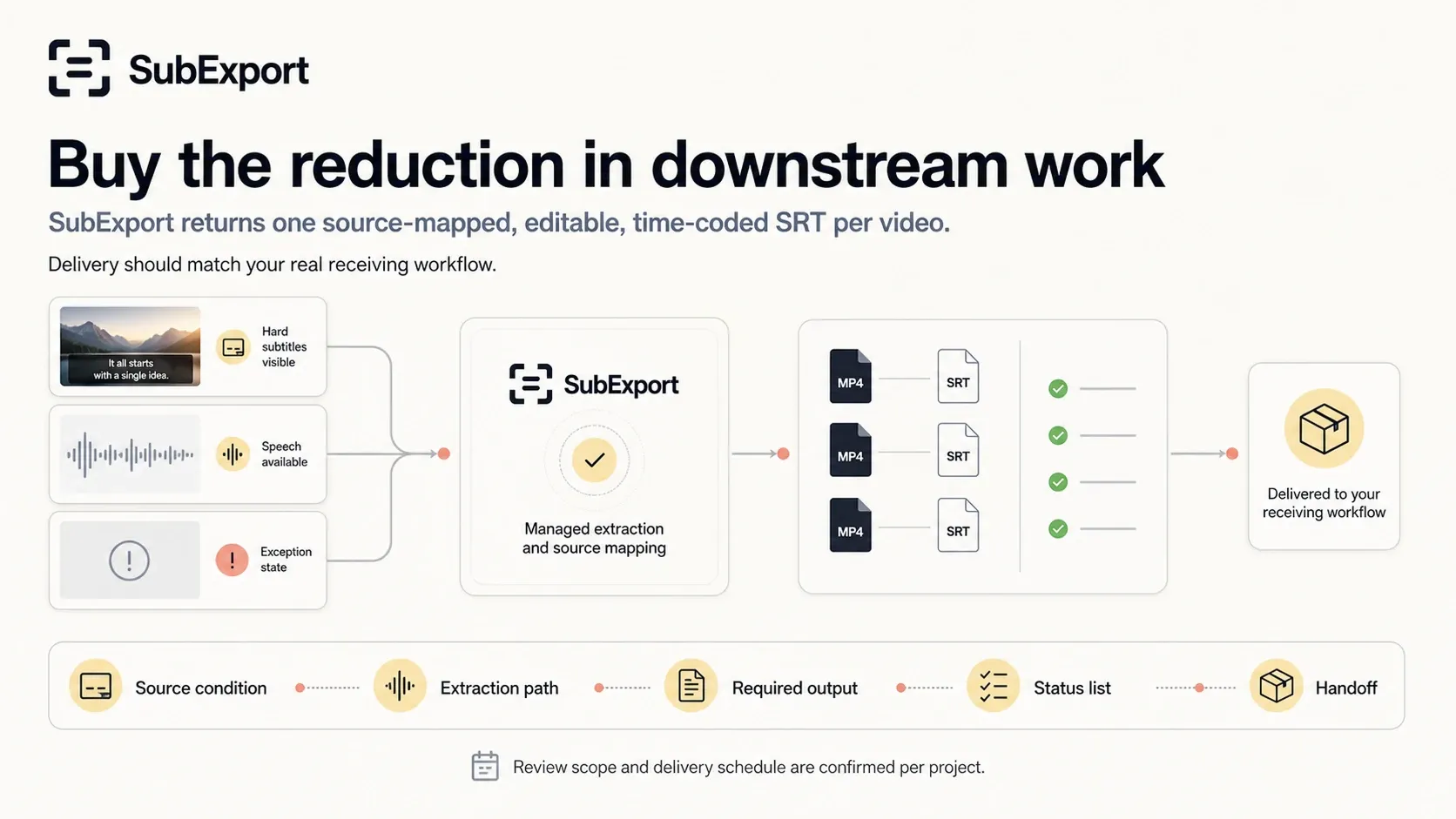
The standard outcome is one source-mapped, editable, time-coded SRT per video, with a status list for failures or items requiring confirmation. The extraction route, format, review scope, delivery schedule, material handoff, and acceptance criteria are confirmed for each project.
SubExport does not position raw recognition as the final product. Its role is to return subtitle assets that can continue into editing, localization, search, or archive work.
Buy the reduction in downstream work
The right provider is not necessarily the one with the longest feature list. It is the one whose delivery matches your real receiving workflow and leaves the least avoidable work behind.
For a batch assessment, provide the number and duration of videos, source condition, required output, review needs, and intended next step. SubExport can confirm the appropriate extraction path and delivery structure.
Learn more about SubExport
Visit the website: SubExport official website
Submit your project: Contact us