
Why Subtitle Extraction Still Takes Time After the AI Finishes Processing
Small issues in text, segmentation, timing, format, and file mapping repeat across every video. At batch scale, those corrections can outweigh the initial extraction time.
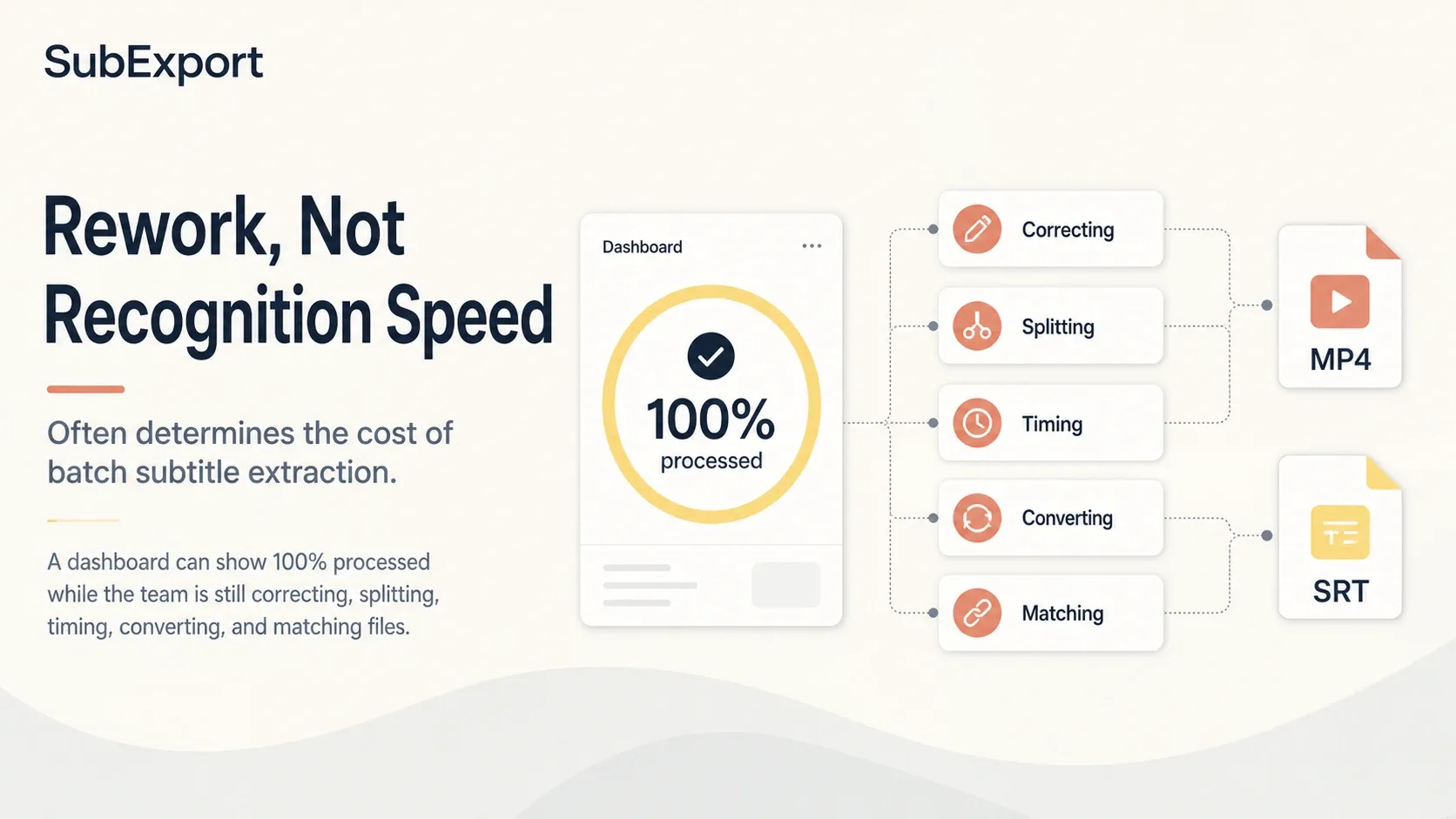
A dashboard can show 100% processed while the team is still opening videos, correcting terms, splitting long entries, adjusting time codes, converting files, and matching results to sources.
This gap explains why a fast extraction run can still produce a slow project.
Recognition complete is not delivery complete
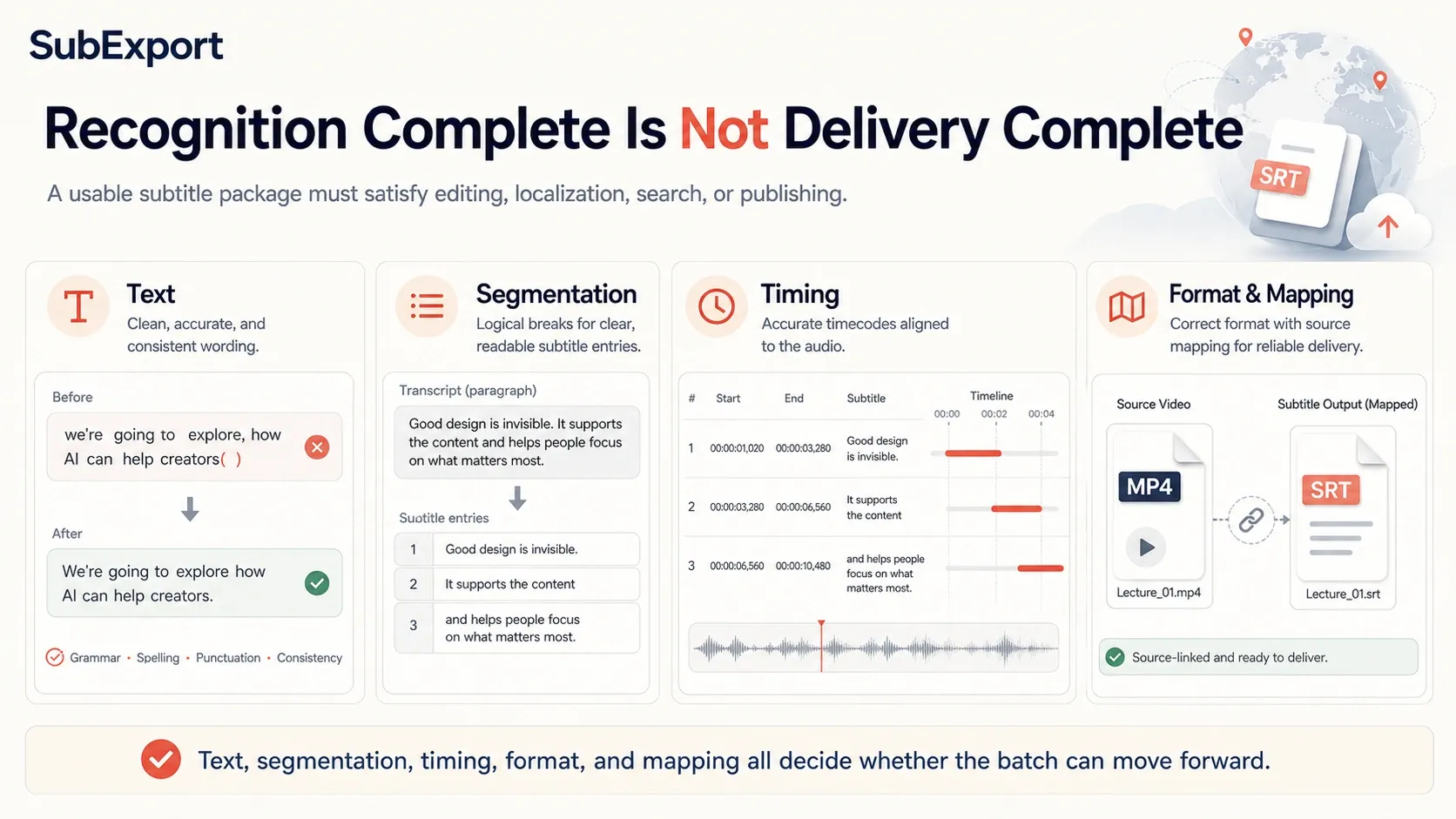
Turning visible text or speech into words solves the first problem: content that was trapped in a video now exists as text. A usable subtitle package must also satisfy the needs of editing, localization, search, or publishing.
If the format and review standard are not defined at the start, the team discovers missing requirements only after the entire batch has been processed. At that point, every correction becomes a second workflow.
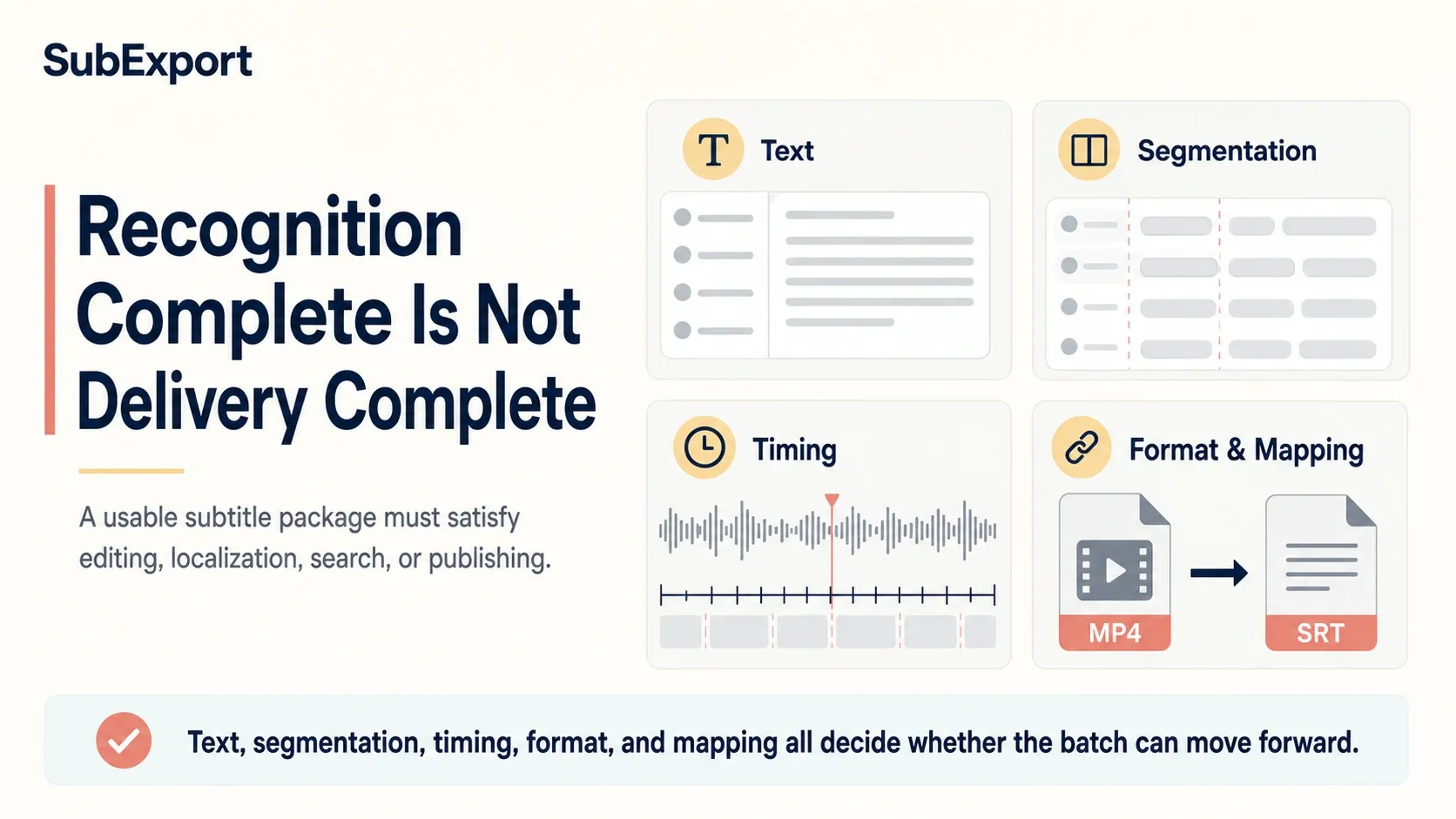
Rework usually appears in four places
- Text: names, specialist terms, punctuation, or speech affected by noise and overlapping voices may need correction.
- Segmentation: transcript-style paragraphs may need to be divided into readable subtitle entries.
- Timing: text that is correct but poorly aligned cannot return to the edit without adjustment.
- Format and mapping: raw text may need to become SRT, and every result still needs to match its source video.
The amount of review depends on the material and agreed scope. Automatic extraction and basic organization do not mean that a human has checked every line.
Minor per-file work becomes major batch labor
If each of 40 files needs only five minutes of additional handling, the batch already carries more than three hours of cleanup before downloads, naming, and team handoffs are counted. This is an illustrative workload calculation, not a promised performance figure.
The lesson is straightforward: repeated post-processing deserves the same attention as extraction speed.
Reduce rework by defining the receiving workflow first
Before extraction begins, identify who will use the result and how:
- Editors need time-coded, importable subtitle files.
- Translators need editable source subtitles with clear file relationships.
- Course and archive teams may prioritize stable chapter naming and retrieval.
Once the destination is clear, the extraction route, output format, naming, segmentation, and review scope can be defined around it.
SubExport builds delivery requirements into the project
SubExport is a managed service for batch subtitle extraction and organization. It uses hard-subtitle OCR when readable captions are burned into the picture and evaluates speech-to-subtitle extraction when there is no usable hard subtitle.
The service confirms the batch, extraction path, format, quality-control scope, naming, and acceptance criteria. Standard delivery provides one editable, time-coded SRT per source video and records failed or unresolved items. Other formats or additional line-level language checks are confirmed separately when required.
The purpose is to reduce the number of times the client must reopen, convert, rename, or remap the same material.
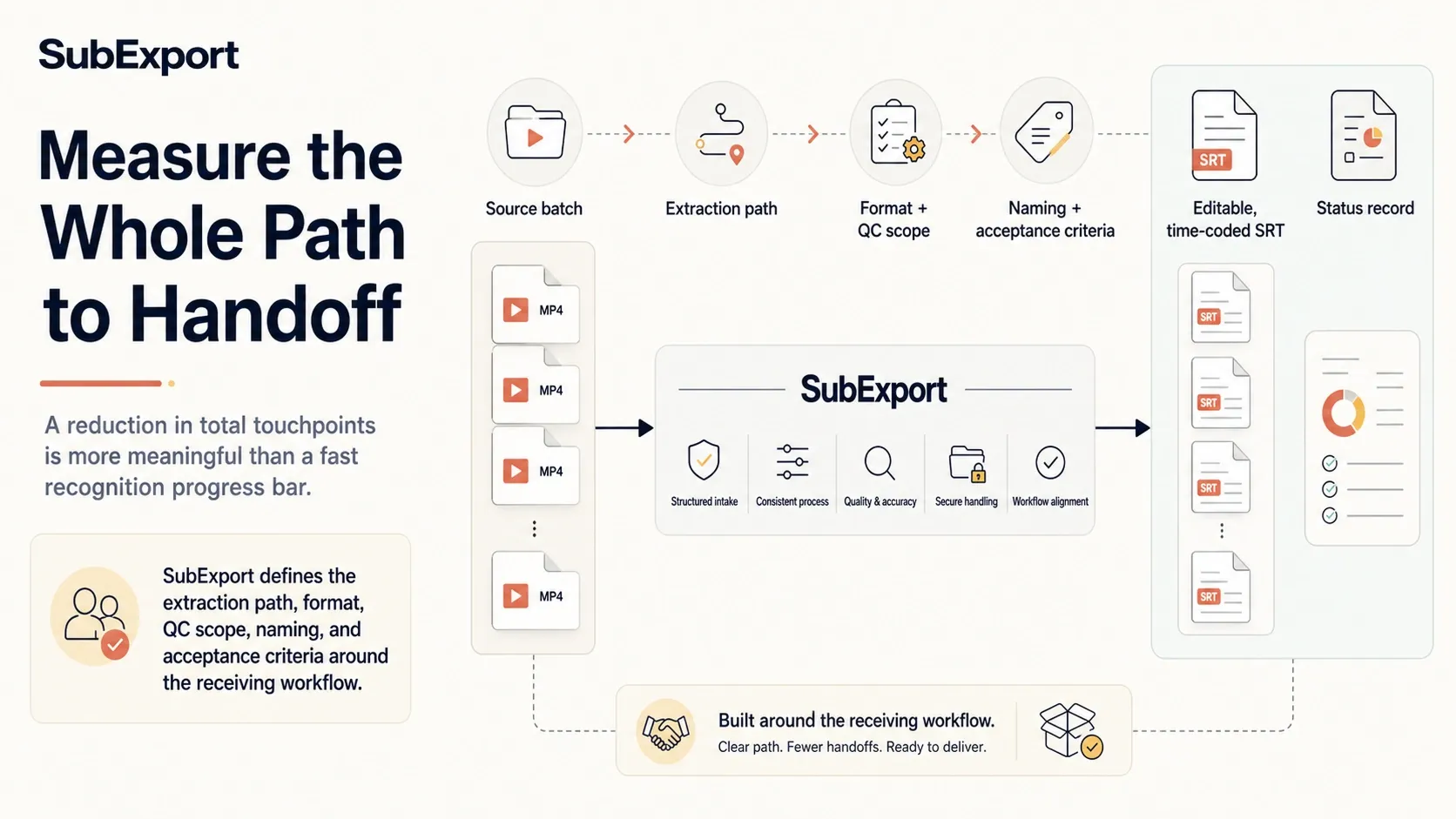
Measure the whole path to handoff
When comparing workflows, track source preparation, extraction, corrections, conversion, organization, and delivery. A reduction in total touchpoints is more meaningful than a fast recognition progress bar.
If your batch includes complex audio, burned-in captions, specialist content, or demanding downstream use, provide representative files, total volume, required format, and review expectations. SubExport can define the extraction and delivery scope around that use.
Learn more about SubExport
Visit the website: SubExport official website
Submit your project: Contact us